
QCAP Director Visits “Natural Drops for Sterilization” to Strengthen Strategic Partnership

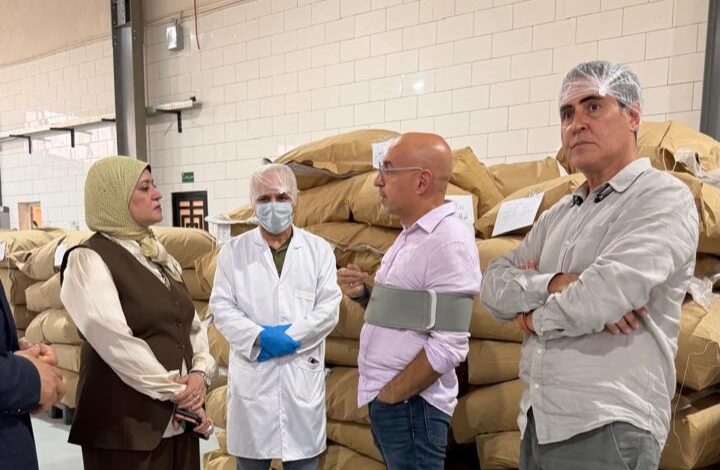
As part of the partnership between the Central Laboratory for analysis of pesticide residues and heavy metals in food “QCAP” and “Natural Drops for Sterilization,” the company welcomed Professor Dr. Hind Abdellah, Director of QCAP, along with the accompanying delegation.
The visit took place within the framework of the ongoing cooperation between the two parties under their existing agreement, which aims to strengthen their strategic partnership.
The delegation toured the factory and reviewed the various services it provides in the processing and sterilization of medicinal and aromatic plants. The visit also explored opportunities to expand research and technical cooperation and enhance the efficiency of monitoring and quality control in accordance with approved standards.
Areas of cooperation include sample inspection, specialized laboratory analyses, technical consultations, knowledge exchange, and the implementation of joint training and research programs. The partnership also covers the development of quality-control mechanisms throughout the stages of production, processing, and handling.
The cooperation is governed by a protocol that defines the responsibilities of each party, beginning with receiving, inspecting, and analyzing samples, followed by reviewing the results and providing technical recommendations, and concluding with monitoring the implementation of the measures required to ensure that products comply with local and international standards.
Hind Abdellah: Practical Training Is a Key Pillar in Advancing Laboratory Analysis
Dr. Hind Abdellah, Director of the Central Laboratory for analysis of pesticide residues and heavy metals in food, said the partnership with “Natural Drops” aims to benefit from the company’s new thermal infrared light sterilization technology.
She noted that the laboratory provides analytical techniques for detecting pesticide residues, heavy metals, mycotoxins, and all other factors related to food safety and quality testing. These services are supported by internationally recognized and accredited results, helping facilitate the acceptance of Egyptian products in global markets.
She added that field visits to companies allow specialists to examine production and processing mechanisms and identify areas requiring development or technical intervention.
Abdellah emphasized that cooperation with the two companies combines laboratory analysis with practical application, thereby enhancing the accuracy of results and the effectiveness of the proposed solutions.
Khaled Mousallati: Innovative Solutions to Combat Bacteria and Mycotoxins
Khaled Mousallati, Chairman of “Natural Drops for Sterilization,” said cooperation with QCAP focuses on joint research aimed at supporting exports of medicinal and aromatic plants.
He explained that QCAP officials had shown strong interest in research cooperation and technical support aimed at improving sterilization systems using thermal infrared light technology, which would help strengthen exports of medicinal and aromatic plants.
Mousallati added that the results would provide a scientific basis for developing sterilization processes, measuring the technology’s effectiveness, improving product quality, and assessing compliance with the requirements of local and export markets.
He noted that the cooperation would also extend to workshops and training programs, stressing that the integration of QCAP’s laboratory expertise with practical and production experience provides a comprehensive foundation for supporting this major industry in Egypt.
Mohamed Nour Bawadkji, Chairman of “Seven Spices,” said cooperation among QCAP, “Natural Drops for Sterilization,” and “Seven Spices” represents an important step toward integrating production expertise and modern technologies with accredited laboratory analyses, thereby supporting improvements in the quality and safety of food products and medicinal and aromatic plants.
Bawadkji explained that “Seven Spices’” participation in the research project would allow thermal infrared light sterilization technology to be tested on actual products under real operating conditions. It would also enable laboratory results from before and after treatment to be compared, helping generate accurate indicators of the technology’s ability to reduce bacterial contamination.
He added that the project’s findings would help companies operating in the sector improve their production and processing operations, reduce contamination levels, and comply with local and international requirements.
Bawadkji emphasized that converting research findings into applicable industrial solutions would enhance the competitiveness of Egyptian products and support their access to export markets.