
“MO Group” for Food Industries is seeking to reduce its export reliance on a limited number of markets by expanding into new destinations across Africa, Europe, and the Caribbean, while maintaining its presence in Arab countries, which account for a significant share of its overseas sales.
The new plan combines entry into markets for the first time, increased business volumes in countries where the group’s products are already available, and the development of product ranges and packaging methods to meet the specific demand in each destination.
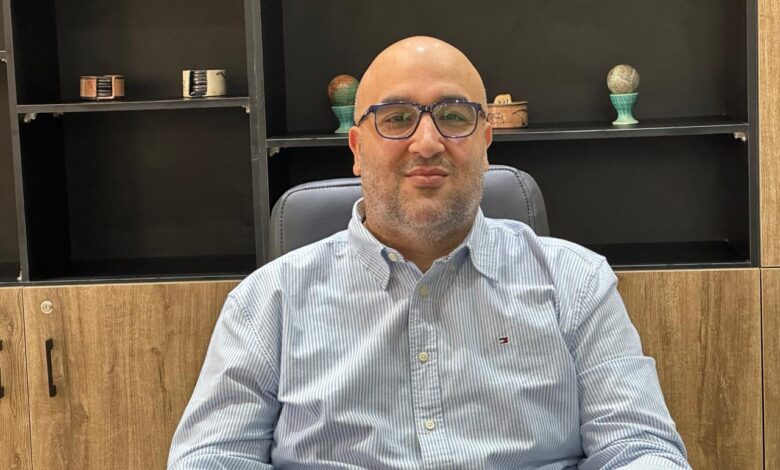
Hamdy El-Abrak, Chairman of “MO Group,” said the company has begun implementing export expansion moves this year by entering South Africa, as well as Romania, Bulgaria, Hungary, Cuba, and Haiti, as part of a strategy aimed at diversifying its importer base and reaching regions outside its traditional markets.
He explained that the selection of new markets is not based solely on the expected level of demand, but also involves studying distribution channels, identifying products suited to local consumers, and assessing importers’ requirements regarding specifications, packaging, and pricing.
El-Abrak believes South Africa’s importance extends beyond the size of its domestic market, as the country could serve as a gateway to other African markets amid growing opportunities for Egyptian food products across the continent.
Alongside South Africa, the company has identified Somalia, Côte d’Ivoire, Senegal, and Madagascar as target markets under its African expansion plan.
The group’s expansion efforts in Africa rely on participation in specialized exhibitions and trade missions, in addition to direct meetings with importers, with the aim of understanding market needs and building sustainable commercial relationships.
Expanding the Group’s Presence in European Markets
In Europe, “MO Group” is working to boost its exports to Romania, Bulgaria, and Hungary, which it views as markets capable of offering new growth opportunities for Egyptian chocolate and confectionery products.
The company is also seeking to increase its business in Germany, Sweden, Denmark, and Belgium, with plans to introduce new products in the German market and expand its customer base there.
El-Abrak noted that European markets differ in terms of consumer preferences, package sizes, and quality and packaging requirements, making it necessary to approach each market according to its specific needs.
He stressed that opportunities to increase Egyptian exports to Europe depend on companies’ ability to comply with required specifications, continuously improve quality, and offer a diverse range of products capable of competing in terms of price, taste, and packaging.
The Caribbean Adds a Non-Traditional Destination
The group’s plan also includes expanding its operations in Cuba and Haiti, giving the company a presence in a region far removed from its traditional export markets in Arab countries and Africa.
The two markets will allow the company to test demand for Egyptian products in the Caribbean and establish new distribution channels that could support further expansion in the coming stages.
El-Abrak said the move into diverse destinations is intended to reduce the risks associated with dependence on a single market, particularly amid potential trade or political fluctuations in some countries that could affect import activity.
Arab Markets Retain Their Strategic Importance
Despite its expansion into new regions, Arab markets remain among the main pillars of “MO Group’s” exports, particularly countries with strong demand for Egyptian products, led by Sudan, Libya, and Saudi Arabia, as well as Lebanon, Syria, Jordan, Tunisia, and Morocco.
The company’s strategy for the coming period is based on two parallel tracks. The first focuses on increasing sales volumes in existing markets, while the second targets entry into new countries and the diversification of its customer base.
El-Abrak explained that export expansion cannot be achieved simply by sending a shipment to a new market. It requires continuous follow-up, product development based on customer feedback, and a reliable and consistent supply flow.